

For some, the greatest burden they carry is their past. Those who ignore the present world around them become farcical characters…a tragic comedy. How can one use this burden to change his or her future? Are you actively making choices to better yourself? We all have a past to deal with. Not all of us choose a future.
Saving Face and Moving Forward
The Russian playwright, Anton Chekhov, penned a work which caused much debate among critics. The point of contention: Is it a comedy or a tragedy? This question has surrounded The Cherry Orchard[1] since it first premiered at the Moscow Art Theater in January 1904.[2] Though the story follows the bankruptcy and sale of an impoverished aristocrat’s estate, the author claims the play to be a comedy. A closer look would reveal it to be a play about pride, the ability to come to terms with one’s past, and the ability to change one’s future.


The manner in which his characters succeed or fail in their ventures are often farcical. Chekhov said as much to his producer. To which his producer replied,
It is not a comedy, not a farce, as you wrote—it is a tragedy no matter if you do indicate a way out into a better world in the last act… When I read it for the second time… I wept like a woman, I tried to control myself, but I could not. I can hear you say: ‘But please, this is a farce…’ No, for the ordinary person this is a tragedy.
Konstantin Stanislavski [3]
Maybe Chekhov’s jokes were lost in translation from page to stage. Maybe his sense of humor was a little darker than his contemporaries. I like to think his producer had the wrong idea about the identity of The Cherry Orchard’s true hero.
A tragedy, in the traditional sense, is a story wherein the protagonist enters a conflict with a force and the result of said conflict is disastrous or sorrowful for the protagonist.[4] A comedy is the antithesis of this. For Chekhov to make this claim, it seems he did not think of the impoverished aristocrat as the hero of his story. Instead, he regarded the character who upheld heroic qualities and ultimately benefited from those values as the protagonist of his play.

If the conflict is the burden of the character’s past then their ability to move on with their lives will be put to the test. They will be tested in their ability to break new ground, to plan their future, and to achieve the destiny they’ve chosen for themselves. A character’s ability to successfully overcome his or her past is a heroic quality. No audience wants the hero to quit. Whether the hero overcomes the conflict or not will determine if he or she is living in a tragedy or a comedy.
The Cherry Orchard is about a person’s ability to save face and move forward. Chekhov’s claim (that his play is a comedy) will be explored through his characters. Three of the main characters have certain values which contribute to the action of the play. The results of their values can be traced back to pride as a guiding principle. Pride, being that trait which hinders or motivates a person’s ability to change, can be used for good or become a prison.
Madame Lyubov Andreievna Ranevskaya (Mrs. Ranevsky)
Mrs. Ranevsky and her estate serve as the focal point of the play. Her values are what drives her to one last visit at her cherry orchard. It’s what she deems important. She likes remembering how things used to be. She remembers the time before she was in debt, a time before following the man she thought she loved to Paris, a time before her son drowned in the river. She wants to hold on to the part of her past when everything was wonderful and exciting. Living in her past allows her to escape the pain in her present. Nostalgia is her escapism. Nostalgia is what she values.

Anything that has a sentimental meaning to Mrs. Ranevsky is held dear to her heart. This is why she refuses to sell her estate. She could sell her fine furniture to pay off a portion of her debt, but she is too attached to it. At one point she refers to a few pieces as “darling” and even gives an affectionate kiss to a table. Selling the cherry orchard would have solved her monetary woes, but she considers her things as priceless. Mrs. Ranevsky’s weakness is her unwillingness to get over her past. The estate serves as a physical point which feeds her nostalgia. She can not forgo any luxury that reminds her of her golden days. She lives as if nothing has changed.
Her loose grasp on reality can be seen in Anya’s comments to Varya:
Aanya: She had already sold her villa at Mentone, she had nothing left…And Mamma wouldn’t understand! When we had dinner...she always ordered the most expensive dishes, and tipped the waiters a whole ruble.
It is not that she did’t understand. She was aware that the sell of her estate was looming. She just did not want to face the facts. Sometimes it seems easier to keep living like everything is the same in order to keep up the illusion that nothing has changed. This is an act of a prideful person. Mrs. Ranevsky does not want to admit defeat. That is why she orders food and tips waiters like she usually does, even though she has no money to spare.
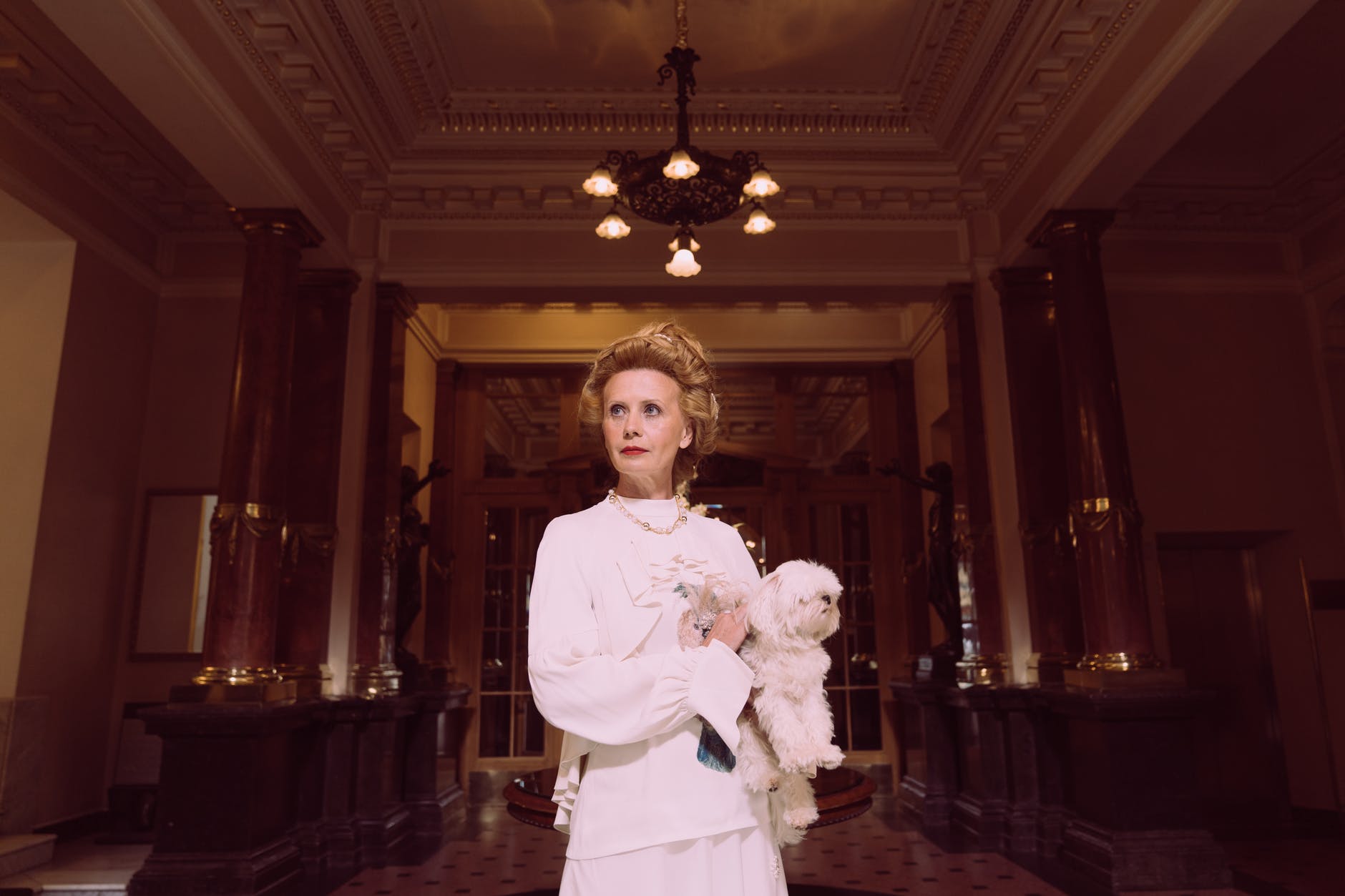
One of the best examples of her trying to hold on to the past takes place during the auction where her land is to be sold. She does not attend the auction and face the reality of her situation. Instead, she sends her brother to bid on the estate with money borrowed from her aunt. Simultaneously, Mrs. Ranevsky throws a party at her house which includes a band she has no means of paying. This is her last stand to hold on to the other reality she has created for herself.
She knows it is her past which is holding her back. At one point, while looking over her garden, she says,
Mrs. Ranevsky: Oh, my childhood, my pure and happy childhood! I used to sleep in this nursery. I used to look out from here into the garden. Happiness awoke with me every morning! And the orchard was just the same then as it is now; nothing is altered. It is all white, all white! Oh, my cherry orchard! After the dark and stormy autumn and the frosts of winter you are young again and full of happiness; the angels of heaven have not abandoned you. Oh! If only I could free my neck and shoulders from the stone that weighs them down! If only I could forget my past!
She wants so badly to be like her dear cherry trees, to be able to weather through the harsh winter and bloom again in spring. She wants to be forever young. Since she cannot forget her past, she wants to live in it. But what she sees as her solution is incorrect. She does not need to forget her past, but overcome it.
Trofimov, a character referred to as the “perpetual student” adds some insight,
Trofimov: …We should first redeem our past, finish with it, and we can expiate it only by suffering, only by extraordinary, unceasing labor.
How do parents fully work through the grief of losing a child? What steps do you take out of debt when you have nothing and owe so much? Both are difficult paths. Redeeming something that is broken can be a painful process. Finding a way to use brokenness for good takes great effort. Even though it would be hard to work through, it is a better, healthier choice. To choose inaction, you choose the way of Mrs. Ranevsky. You will spend your time in a fantasy world, trapped in your past, and unable to move forward.
Firs Nikolayevitch
Firs grew up on the Ranevsky’s land as a servant. Even though the serfs were freed, he continues to serve the family. He does not do this out of the kindness of his heart, but because he is afraid of change. The way things were is how they always will be to him. His core value in life is order. He can not live without someone to serve. This fact can be observed in the following dialog between Mrs. Ranevsky and Firs.
Mrs. Ranevsky: Firs, if the estate is sold, where will you go?

Firs: I’ll go where you tell me.

Mrs. Ranevsky: Why do you look like that? Are you ill? You ought to go to bed.

Firs: Yes! Me go to bed, and who’s to hand things round? Who’s to see to things? I’m the only one in the whole house.

This scene shows that he is committed to a life of servitude and that he, in fact, defines his existence based on this sense of order. Firs prides himself in not changing his ways after the freedom of the serfs (an event he refers to as “the calamity”). When the serfs were freed, Firs “[remembers] they were all very happy, but why they were happy, they didn’t know themselves.” This sheds some light on his weakness. Firs refuses to adapt to change. Stubbornness is a trait of a prideful person. By not changing, Firs has become obsolete as a person. He loses his humanity. He serves the same functions as a piece of furniture.
At one point, Gayev toasts a piece of furniture saying,
Gayev: Dear, honored bookcase, hail to you who for more than a century have served the glorious ideals of goodness and justice! Your silent summons to fruitful toil has never weakened in all those hundred years, sustaining, through successive generations of our family, courage and faith in a better future, and fostering in us ideals of goodness and social consciousness.
The word “bookcase” can be replaced with “Firs” and it would still make sense within the context of the play. Having chosen to serve for more than one generation of the Ranevsky family, Firs literally exists to supply books, coats, or any other assortment of things when they are needed. He then stores the items again when the user is through with them.


At the end of the play, his regression to furniture can be seen more plainly. After the estate is sold, the family gives one last look around and then they leave the property. Unfortunately, no one remembers Firs is still inside. He is locked in the summer home for the winter (as furniture would be). Whether he is let out of the house or not depends on if Gayev has grabbed the correct coat. Firs has shifted from being a bookcase to a coat rack.
Firs: It’s locked. They’ve gone away. They’ve for-gotten about me. . . . Never mind, I’ll sit here. . . . And [Gayev] will have gone in a light overcoat instead of putting on his fur coat. . . . [...] Life’s gone on as if I’d never lived. I’ll lie down. . . . You’ve no strength left in you, nothing left at all. . . . Oh, you . . . bungler!
Once again, Trofimov shares insight on accepting change:
Trofimov: To avoid the petty and illusory, everything that prevents us from being free and happy—that is the goal and meaning of our life. Forward! Do not fall behind, friends.
Like Mrs. Ranevsky, Firs is also stuck in the past, but for different reasons. His pride manifested in another unhealthy way. His issue is not “[redeeming his] past,” but moving forward from his past. We must adapt to the changing world. We must not be distracted by the things which bind us in the past and prevent us from living in freedom. Once he is able to accept change, Firs will be capable of truly living his life.
Yermolay Alexeievitch Lopakhin
Lopakhin considers himself “a pig in a pastry shop” because he used to be poor, but now he has enough money to buy whatever he wants. He grew up the son of a peasant, but he aspired to be more than that. As a philistine, his sole value is money. He is very ambitious, but his value of money goes beyond just wanting to be wealthy; he is embarrassed of his past. He tells Mrs. Ranevsky,
Lopakhin: My pop was a peasant, an idiot; he understood nothing, never taught me anything, all he did was beat me when he was drunk, and always with a stick. Fundamentally, I’m just the same kind of blockhead and idiot. I was never taught anything—I have a terrible handwriting. I write so that I feel ashamed before people, like a pig.
He did not want to grow up to be like his father, to live and serve on other people’s land. The urge to become something better than his father led to his weakness. He became a prideful person. He is so focused on making money that it is all he cares about. His collection of wealth is what defines him.
When asked about her engagement to Lopakhin, Varya replies,
Varya: Oh, I don’t think anything will ever come of it. He’s too busy, he has no time for me…pays no attention to me.
He is so consumed with the conquest of his past that he is always looking at his future. He ignores the person whom he confesses he loves. He forgets to live in the present with her. Even when the Ranevskys get home from their trip and are swapping reminiscent stories about the house, Lopakhin repeatedly interrupts them to talk about business. He has no time to reminisce because time is money. Each ruble he earns takes him that much further away from his humble beginnings.

At the end of the play, Lopakhin’s pride is bolstered by his purchase of the Ranevsky’s estate. This is something that his father was never able to do, and he makes sure everyone knows it,
Lopakhin: If my father and my grandfather could rise from their graves and see all that has happened—how their Yermolay, who used to be flogged, their half-literate Yermolay, who used to run about barefoot in winter, how that very Yermolay has bought the most magnificent estate in the world. I bought the estate where my father and grandfather were slaves, where they weren’t even allowed to enter the kitchen.
Although, he has become self-righteous about his abilities and his ambition, he did overcome his past. The purchase of the estate is his crowning jewel, the trophy acknowledging his achievement. He did not allow his past to swallow him whole and define who he is in the present. Lopakhin has “[redeemed his] past”. He has also chosen from a very young age to always move forward. In order to accomplish this, he is always thinking about his future.
Lopakhin is still a deeply flawed character, but it is easy to see why Anton Chekhov views his play as a comedy rather than a tragedy. Lopakhin takes control of his Fate and lives his life the best that he can. He overcomes his past and is able to change his future.
The Hero of Your Story & A Tragic Comedian
Through the first read, one may consider The Cherry Orchard to be a tragedy, but when the characters and their values are thoroughly considered it lends itself to be more of a comedy, as was Chekhov’s original intention. Chekhov lays down his ideals using Trofimov, but puts them into action using Lopakhin. Based on Chekhov’s opinion of his play being a comedy, it is obvious he views the story’s hero to be Lopakhin. The other characters serve as punchlines to irreverent comedy. The farce is highlighted by the other characters’ unnecessary actions and inactions which serve no aid to their dilemma.
Out of the three characters discussed (Mrs. Ranevsky, Firs, and Lopakhin) the latter is the only one who has the courage to overcome his past and the ambition to conquer his future. Lopakhin is the only one that says to the world, “That was my past, but this is who I want to be,” and then he does something about it. Being able to redeem a tragic past or adapt to change is a heroic quality. Since the hero of the play overcame the burden of his past, The Cherry Orchard is a comedy.
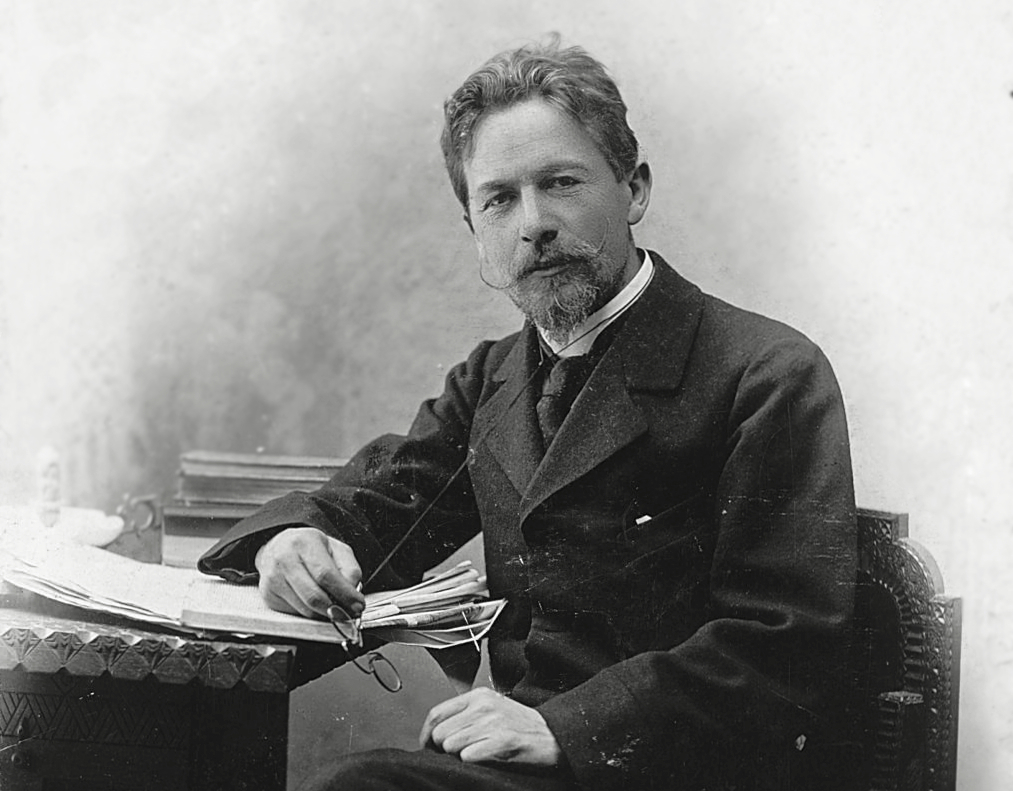
There is still debate when a production company presents The Cherry Orchard. There may always be a question on whether to stage the play as a tragedy or a comedy. I think Chekhov’s intention should be followed. It should be staged as a farce so the tragic moments serve a purpose beyond sadness.
Instead of accepting a story as tragic, I believe Chekhov’s intention was to stir questions of introspection. There will be sadness in this life. I believe he intends for you to consider yourself. What kind of play are you living in? Are you a farcical character? Are you the butt of the joke as a result of your own actions? Are you ignoring the present world around you? Are you actively making choices to better yourself? Who is the hero of your story?
You can live there–in your past–or you can take hold of your future. Make choices based, not on who you are, but on who you want to be. But beware to remember your present. If you overcompensate, you may go the way of Lopakin and become a prisoner of your future.
Unfortunately, The Cherry Orchard was the final play written by Anton Chekhov. He died from tuberculosis in July 1904, having never seen his play produced as a comedy.[2] It is a great tragedy for a comedian to die before his punchline. I like to think (if he had the time) he would have also written a continuation to his play showing the farce of living in the future instead of the present. Lopakin could have been given a comic treatment reminiscent of a certain Charles Dickens character.[5] Instead, he left us with a play which has us ponder on the past. This may be just as well–for we all have a past to deal with; not all of us choose a future.
References
- Chekhov, Anton. The Cherry Orchard. 1904. (Paperback) (Kindle)
- Encyclopedia.com. The Cherry Orchard. December 5, 2021. https://www.encyclopedia.com/arts/educational-magazines/cherry-orchard.
- Field, Bradford S., Jr., Gilbert, Miriam, and Klaus, Carl H. Stages of Drama: Classical to Contemporary Theater. Scott, Foresman, 1981. (Paperback) (Paperback 5th Edition)
- Merriam-Webster Inc. Merriam-Webster. December 5, 2021. https://www.merriam-webster.com/dictionary/tragedy.
- Dickens, Charles. A Christmas Carol. 1843. (Paperback Illustrated) (Kindle)
As an Amazon Associate the author may earn from qualifying purchases. You can support me, and get something neat for yourself, by purchasing through the recommended links in this article.

 Nicholas B. Spurrier
Leave a reply to Be Present: 4 Ways to Invest in Your Marriage – The Forest in The Trees Cancel reply